
Summary
The choice between Vendor Central and Seller Central shapes everything: your margins, pricing control, cash flow, data access, and long-term independence on Amazon.
Over 60% of Amazon’s total unit sales now come from third-party Seller Central accounts. Yet brands still receive Vendor Central invitations and assume it is the better option.
It is not always. This guide explains exactly how each model works, what the real trade-offs are, and which structure fits your brand in 2026.
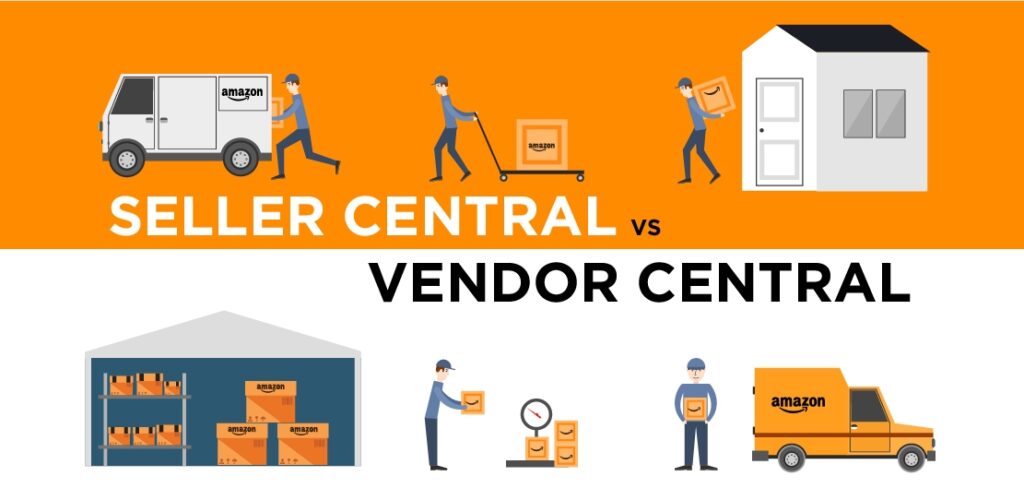
The Core Difference in One Sentence
Vendor Central: Amazon buys your stock and sells it. You are the supplier.
Seller Central: You sell directly to Amazon customers. Amazon is the marketplace.
Everything else flows from this single distinction.
How Vendor Central Works
Vendor Central is invite-only. Amazon approaches brands, manufacturers, and distributors based on sales performance and product demand.
Once enrolled:
- Amazon sends Purchase Orders for the products it wants
- You ship inventory in bulk to Amazon’s fulfillment centres
- Amazon prices, sells, and fulfills to end customers
- Your listings show “Ships from and sold by Amazon”
- You get paid on Net 60 to Net 90 day terms
You are a wholesale supplier. Amazon is your only customer.
How Seller Central Works
Seller Central is open to any registered business. No invitation needed.
Once enrolled:
- You list products and set your own retail prices
- You choose FBA (Amazon fulfills) or FBM (you fulfill)
- You sell directly to Amazon customers
- You access real-time sales data, advertising tools, and Brand Analytics
- You get paid every 14 days
You are the retailer. Amazon is the platform.
Head to Head Comparison
Pricing Control
Seller Central
You set retail prices and adjust them in real time. You maintain consistency across all your channels.
Vendor Central
Amazon controls retail pricing. It can discount your products without your approval at any time. This disrupts your MAP policies and creates conflict with wholesale and DTC partners.
Margin Structure
Seller Central
You receive the full retail price minus referral fees of 8 to 15% and FBA fees where applicable. For a product retailing at 30 dollars, net revenue per unit is significantly higher than the equivalent Vendor Central wholesale price.
Vendor Central
Amazon pays wholesale, typically 50 to 60% of the retail price. Amazon captures the retail margin entirely.
Cash Flow
Seller Central
Payment every 14 days from sales.
Vendor Central
Payment on Net 60 to Net 90 terms from the purchase order date. For brands managing working capital tightly, this difference is significant.
Listing Control
Seller Central
- Update titles, images, and bullet points within hours
- Full control over A plus Content
- Brand Storefront managed directly
Vendor Central
- Listing changes go through Amazon’s vendor support system
- Updates can take weeks
- Amazon can override content you submit
Data Access
Seller Central
- Real-time sales data by ASIN
- Page views and conversion rates
- Customer search term data via Brand Analytics
- Advertising performance visibility
Vendor Central
- You see what Amazon orders from you
- You do not see what Amazon sells to customers
- No direct access to conversion data or search term performance
Advertising
Seller Central
Full access to Sponsored Products, Sponsored Brands, and Sponsored Display. You control budgets, targeting, and campaign timing directly.
Vendor Central
Advertising access exists but historically requires higher minimum budgets and offers less operational transparency than Seller Central.
A Plus Content
Seller Central
Available to all Brand Registry members at no additional cost. Premium A plus Content modules now free for Professional accounts.
Vendor Central
A plus Content access exists but premium modules have historically required additional fees.
Payment Terms
| Factor | Seller Central | Vendor Central |
| Who sells | You | Amazon |
| Pricing control | Full | None |
| Payment cycle | Every 14 days | Net 60 to 90 days |
| Margin | Retail minus fees | Wholesale only |
| Data access | Full real-time | Limited |
| Listing control | Direct | Via Amazon support |
| Access | Open | Invite only |
| Fulfillment choice | FBA or FBM | Amazon only |
The Trade-offs Brands Discover Too Late
Amazon Can Discount Without Notice
Amazon’s pricing algorithm discounts Vendor Central products freely.
If your product sells at 24.99 dollars on your Shopify store but Amazon discounts it to 17.99 dollars, your entire pricing structure breaks. Wholesale partners complain. Your DTC conversion drops. You have no mechanism to stop it.
Annual Negotiations Favour Amazon
Vendor terms are renegotiated every year.
Amazon typically pushes for:
- Lower wholesale costs
- Higher marketing contribution fees
- Stricter compliance requirements
Getting Amazon to accept a cost increase when your supplier costs rise is consistently one of the hardest commercial conversations in Vendor Central.
Purchase Orders Can Stop Without Warning
In Vendor Central, your revenue depends entirely on Amazon’s purchase orders.
If Amazon’s algorithm decides it is overstocked on your product, it simply stops ordering. Your sales go to zero without any action on your part and without advance notice.
Seller Central sellers control their own inventory deployment and are not exposed to this risk in the same way.
Data Gaps Restrict Decision Making
Without visibility into what Amazon is actually selling to customers, it is extremely difficult to:
- Optimise listings effectively
- Plan inventory accurately
- Evaluate advertising performance
- Understand which search terms drive discovery
This puts Vendor Central brands at a systematic disadvantage in competitive categories.
Who Should Use Vendor Central
Vendor Central suits a specific type of brand situation, not growing brands as a general rule.
Consider Vendor Central if:
- You are a large manufacturer optimised for B2B wholesale supply
- You have fixed wholesale pricing structures and high production capacity
- You have no interest or resource to manage the retail layer of your Amazon business
- The “Sold by Amazon” badge provides a meaningful trust premium in your category
- You have strong enough negotiating leverage to protect your commercial terms annually
Who Should Use Seller Central
Most brands in 2026 operate more effectively on Seller Central. This includes:
Emerging and growing brands
Pricing control, real-time data, and margin preservation are all commercially critical at growth stage. Seller Central supports all three. Vendor Central undermines all three.
Multi-channel brands
If you sell through wholesale, DTC, and Amazon simultaneously, pricing parity across channels is essential. Vendor Central’s algorithmic discounting makes this impossible to maintain.
Brands needing listing agility
Packaging change, compliance update, keyword strategy refresh. On Seller Central these take hours. On Vendor Central they take weeks.
Funded sellers and ecommerce investors
Seller Central provides the data access, operational control, and commercial flexibility that structured marketplace investment requires.
The Hybrid Approach
Some established brands operate both accounts simultaneously. Amazon permits this.
How it typically works:
- Hero products or specific SKUs supplied via Vendor Central
- Broader portfolio managed through Seller Central
- Different commercial terms applied by product line
The challenge:
Managing a hybrid requires sophisticated pricing and inventory coordination to prevent conflicts between what Amazon sells at wholesale and what the brand sells directly.
It is not suited to brands without dedicated ecommerce management resource.
Switching from Vendor Central to Seller Central
Already on Vendor Central and considering a move? The transition requires planning across three areas.
Step 1: Commercial assessment
Model current Vendor Central wholesale margins against projected Seller Central net margins accounting for referral fees, FBA costs, advertising investment, and management overhead.
Step 2: Brand Registry transfer
If Brand Registry was established under Vendor Central, the linkage must be transferred to the new Seller Central account to maintain access to brand protection, A plus Content, and analytics.
Step 3: Listing content management
Content published under Vendor Central may persist and conflict with Seller Central content. Work with Amazon’s Brand Registry team to ensure content is correctly attributed to the new account.
Do not switch abruptly. Plan the transition to preserve existing sales velocity through the account change.
How Primex Group Manages Both Account Types
We manage both Amazon Seller Central and Vendor Central operations for brands across FMCG, Beauty, Baby, Health, Pet Care, and Household categories in the UK, USA, and UAE.
Our position:
For most growth-stage brands, Seller Central delivers better commercial outcomes. Pricing control, margin structure, data access, and listing agility all favour Seller Central in competitive categories.
For brands already on Vendor Central, we assess the commercial case for transition and where appropriate manage the full migration process.
What we manage on Seller Central:
- Account setup and verification
- Brand Registry enrolment
- Catalog governance and listing optimisation
- Pricing strategy across channels
- PPC campaign management
- Compliance monitoring
- Inventory planning and FBA coordination
- Performance reporting with clear KPIs
You retain full ownership of all accounts and have direct access to all performance data at all times.
Frequently Asked Questions
Can I use both Vendor Central and Seller Central at the same time?
Yes. Amazon permits a hybrid model. It works for some established brands but requires careful pricing and inventory management to avoid channel conflicts.
Can I switch from Vendor Central to Seller Central?
Yes. It requires commercial planning, Brand Registry relinking, and listing content management. It is a structured transition, not an instant switch.
Does Vendor Central give better placement than Seller Central?
Not categorically. Seller Central with FBA and strong account health competes effectively for Buy Box and organic placement. The “Sold by Amazon” badge provides a trust signal in some categories but does not guarantee superior placement overall.
How long does Vendor Central take to pay compared to Seller Central?
Seller Central pays every 14 days. Vendor Central pays on Net 60 to Net 90 terms. For brands managing working capital carefully this difference is commercially significant.
Who gets invited to Vendor Central?
Amazon invites established brands, manufacturers, and distributors based on sales performance. Building a strong Seller Central track record is one of the most reliable ways to attract an invitation.
Which model gives better margin?
Seller Central typically delivers better margin per unit. You retain the full retail price minus referral fees of 8 to 15% and FBA costs. Vendor Central pays wholesale at typically 50 to 60% of retail with Amazon capturing the difference.
Related Reading
- How Amazon Seller Central Works: A Complete Operational Guide for Brands and Investors
- How to Win the Amazon Buy Box: A Practical Guide for Sellers and Brand Managers
- Amazon PPC for Brands: How to Structure Campaigns That Actually Deliver ROI
- Amazon Account Suspension: What Causes It, How to Prevent It, and What to Do If It Happens
- How to Set Up Amazon Brand Registry: Step by Step for UK and US Sellers
- Outsourced Ecommerce Management: What It Is, What It Costs, and When It Makes Sense